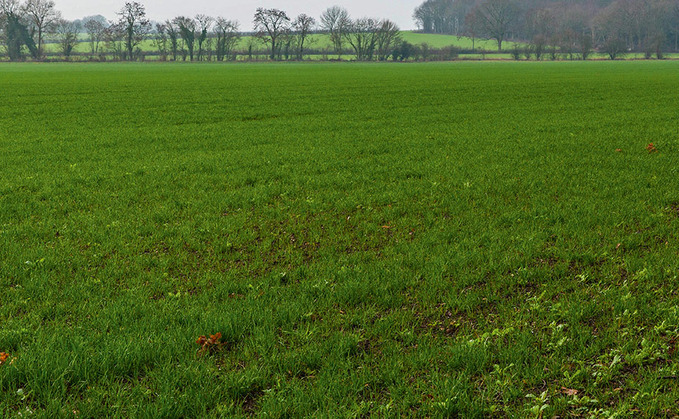
Taking the time to knock out seedling weeds in a new grass reseed will substantially reduce the likelihood of them returning at a later date and safeguard investment.
Herbicide application shortly after reseeding is the Achilles heel for perennial weeds.
This timing provides the ideal opportunity to get on top of seedling weeds before they grow and establish in a sward.
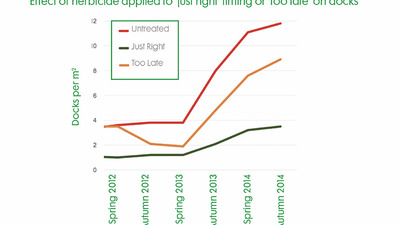
According to recent Teagasc trial work, applying a herbicide to small docks, shortly after reseeding will reduce dock levels for the following five years (see graph).
Nufarm's Brent Gibbon explains: "Applying the herbicide of the dock's development, facilitates almost complete elimination.
"The trials have also shown docks which emerge in the following years rarely establish due to competition from the grass."
With a grass reseed costing about 拢450-拢500/hectare it makes sense to safeguard this investment by ensuring any new ley gets off to the best start possible.
Applying herbicide to seedling docks 鈥榡ust right' helps reduce the level of docks in the sward in the long-term.
Waiting to spray when docks are mature or 鈥榯oo late' causes docks to come back in higher numbers, sooner.
With this in mind, Mr Gibbon shares his five-step programme for a new reseed.
1. Assess the weed burden pre-ploughing
The old ley should always be completely burnt off prior to a reseed.
The key is to identify if it is just Taking the time to knock out seedling weeds in a new grass reseed will substantially reduce the likelihood of them returning at a later date and safeguard investment.
grasses which need destruction or perennial weeds as well.
What are the species present and population levels? This will determine product choice.
2. Choose the right product for sward destruction
If you have grass and perennial weeds in the sward, apply Kyleo (glyphosate + 2,4-D) at 5 litres/ha.
Unlike straight glyphosate, the mix completely destroys the old sward and also controls weeds such as nettles, thistles, and docks, as well as clovers and volunteer brassicas, which frequently survive a straight glyphosate spray.
If the sward is just grass, use a high quality, advanced salt technology glyphosate such as Rattler (540g/litre).
A low quality glyphosate does not have good surfactant levels so do not stick to the foliage as well.
3. Check the label for reseed interval
The time between Kyleo application and drilling will range from seven days if ploughed, to 28 days if direct drilled.
For grass and clover mixes, following ploughing you can go in 14 days after Kyleo application.
4. Apply herbicide at the correct time after reseeding
Once the grass is sown and reaches the four-leaf stage, consider a herbicide.Think phenoxy-based herbicides.
For example, PastureMaster (2,4-D + MCPA) 2.5 litres/ ha and fluroxypyr 0.75 litres/ ha, to deal with seedling docks, thistles, nettles, chickweed, Fat Hen together with other annuals. Apply from April onwards.
5. Make sure clover is at the right stage before spraying
If clover is in the new reseed, wait for it to be at the one trifoliate leaf onwards before applying Clovermaster 2.5 litres/ha, plus Squire Ultra 30g/ha.
听Always read the product label and seek advice from a BASIS qualified agronomist.