The dry conditions of 2025 mean that over-working soils could lead to significant structural damage and wasted costs, according to Dick Neale, technical manager at crop production specialists Hutchinsons.
Speaking at a recent Hutchinsons Cultivations Demonstration Day in Yorkshire, Mr Neale urged growers to put soil conditions at the forefront of decision-making.
Decisions around cultivations this autumn need to be more strategic than routine, he said. "Let soil condition, not the calendar, dictate operations. Careful assessment this autumn could save unnecessary costs while safeguarding the long-term health of soils.
Read more:ÌýAsk the Expert: Your questions answered onÌýsoilÌýhealth
"The first consideration is whether to work the soil at all," Mr Neale said. "Be patient. Consider leaving soil re-structuring to nature rather than reaching for a big bit of metal."
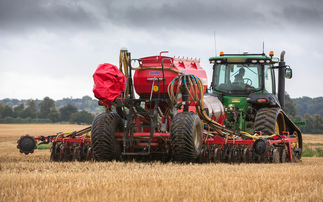
Minimal intervention, he suggested, is often best. Where cultivations are required, the seedbed need not be more than a couple of inches deep. "Ask yourself whether working deeper than that will really have an impact — and weigh up the costs," he said.
For example, a full-depth cultivation may cost around £90 per hectare, yet a targeted low disturbance loosening Ìýpass at £30/ha could achieve a better result.
Tramlines and field traffic
Another key point was the management of tramlines. Mr Neale argued for retaining them across multiple seasons:
"In many instances there is no point in removing them. They provide valuable access year-round, and with GPS and matched-width machinery it is easy to re-use the same lines. Removing them risks over-working the entire field, raising un-weathered soil, creating clods, and leaving zones prone to re-compaction."
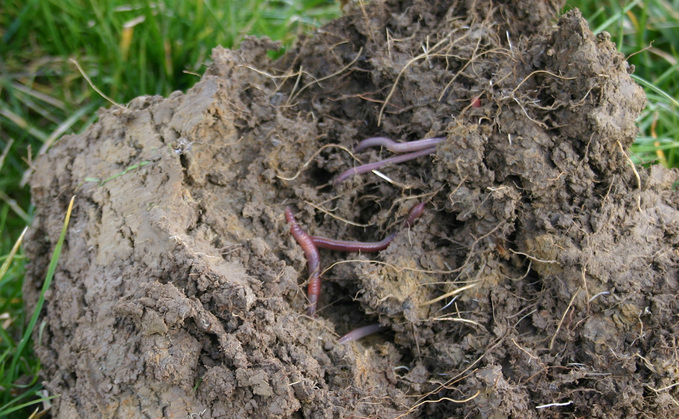
Healthy soils between tramlines may not have been trafficked for years, allowing root networks, fissures, and earthworms to build strong natural structure.
While an over-aggressive pass risks undoing years of natural soil development, an under-aggressive pass can be just as damaging. "Failing to address compaction properly still costs as much as doing it right — but without the benefit," he said.
Read more:ÌýGroundswell 2025: Is grazing livestock key toÌýsoilÌýhealth?
Farmers on lighter soils also need to tread carefully. "Over time, such soils may acidify in the upper profile, creating the need for occasional deeper cultivation. This can help mix more alkaline subsoil into the top layer, reducing acidity in a way that may be more sustainable than repeated lime applications."
Beyond mechanical options, cover crops offer another route to improved soil condition, he suggested.
"Deep-rooting species such as brassicas, linseed, vetch, lucerne, chicory, and plantain can help break through compaction layers and redistribute nutrients vertically, however, identified compaction zones should be addressed with appropriate cultivation rather than rely on roots alone.
"Establishment need not be costly, with 10 to 12 kilograms per hectare of seed often sufficient to protect soil, improve infiltration, and maintain biological activity over winter."
Monitoring soil health
Given the year's dry conditions, Mr Neale stressed the importance of checking soils carefully before any action.
ÌýA Visual Evaluation of Soil Structure (VESS) test, ideally carried out in early spring when soils have re-wetted, allows farmers to spot signs of compaction, assess rooting, and judge changes in aggregation and colour.
"Remember, healthy soil smells ‘sweet', unhealthy soils can give off a noticeably stagnant aroma," he added. "It is the biology you are smelling".
Read more:Ìý7 ways betterÌýsoilÌýmeans better business
Looking ahead, technology could add new dimensions to soil monitoring. Hutchinsons is currently testing an "electronic nose" developed by PES Technologies, capable of analysing a soil sample in minutes to provide data on microbial biomass, respiratory activity, nutrient availability, pH,Ìý water content and soil texture.
"If the technology delivers consistent data, it could become a valuable on-farm tool," Mr Neale added.
More information
The Cultivation demo day was held in partnership with Sumo and Wilfred Scruton Ltd, and kindly hosted by HS Thirsk & Son of Little Grange Farm, Pocklington, Yorkshire,Ìý