The report provides new evidence on chlorpropham (CIPC) residues in potatoes stored during the 2024/25 season and will inform the Chemical Regulation Division's (CRD) annual review of the temporary Maximum Residue Level (tMRL), currently set at 0.35mg/kg.
The report details residue data submitted by growers, store managers and supply chain partners. In total, 156 sample results were received from potato stores with a known history of CIPC use. Of these, 21 samples (13.5%) contained detectable CIPC residues, all of which were well within the tMRL.
Decline
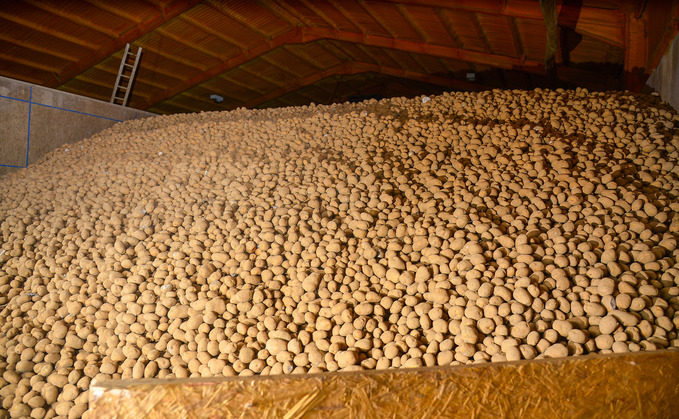
While residue levels continue to decline, the provisional data mirrors Year 1 patterns, reinforcing the need for a tMRL. Without it, many stores would exceed the standard detection threshold and be taken out of use, placing significant pressure on the UK's storage infrastructure and supply chain resilience.
READ MORE: Why the听potato听industry is seeking a re-set
Adrian Cunnington, chair of the CIPC Residues Monitoring Group, says: "It is hard to overstate the challenge if we lost our storage capacity; it would be devastating for the industry. We are watching residues come down year-on-year, but the biggest challenge remains getting enough samples. It is imperative that we continue to collect and submit residue data if we are to maintain our supply base for years to come."
Industry support
CRMG is now calling on the industry to support a third sampling season, which will underpin the 2025/26 submission to CRD. Growers and store managers already collecting multi-residue data are urged to submit chlorpropham results from crops stored for at least 60 days. All analysis must be conducted by a UKAS-accredited laboratory.
READ MORE: New GB Potatoes partnership opens door to crop protection
This evidence is vital to demonstrate the continued need for a tMRL. Without sufficient data, stores with a CIPC history remain at risk of being taken out of use.
Mr Cunnington听adds: "We are asking growers to help build an accurate national picture of residue levels across stores with a CIPC history. By contributing their data, growers will help ensure that the industry can continue to use vital storage capacity safely and responsibly."
Growers and store managers willing to submit anonymised CIPC residue data can contact听[email protected].听