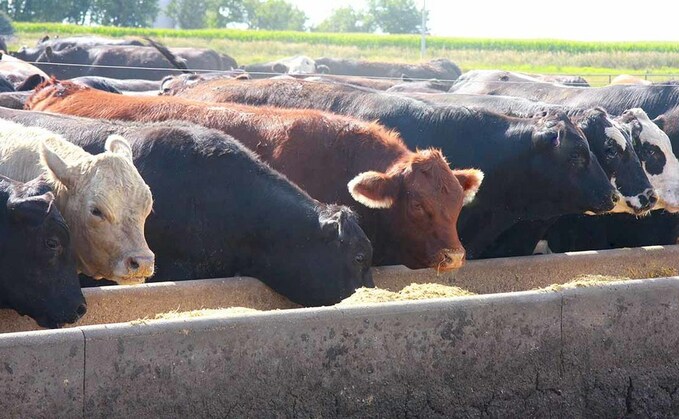
CattleÌýnumbers in the US have reached their lowest level since 1951 following two years of drought.
According to the annual cattle report from the US Department of Agriculture (USDA) survey, there were 87.2 million head of cattle and calves on US farms as of January 1, the lowest level in 73 years.
The US calf crop was estimated at 33.6m, down 2.5 per cent on an already reduced 2022.
See also: Meet the NFU Cymru's livestock champion of the year for 2023
The USDA report showed there were 28.2m beef cows in the United States as of Jan 1, 2024, down 2 per cent from last year. The number of milk cows in the US decreased slightly to 9.36m.
All cattle on feed were at 14.4m head, up 2 per cent from 2023.
Writing on X, the National Agricultural Statistics Service said: "The previous lowest US cattle and calves inventory was in 1951 at 82.1m head compared to 2024 inventory at 87.2m."
It highlighted record low inventories in Connecticut, Indiana, Maine, Massachusetts, New Hampshire and Vermont.
See also: Australian lamb and mutton exports hit record high
The CattleFax Outlook Seminar, held as part of the 2024 Cattle Industry Convention and NCBA Trade Show in Orlando, Florida, highlighted as reduced cattle numbers and beef production continue over the next three years, leverage and profitability would continue to favour cattle producers.Ìý
Despite record prices, expansion will likely be delayed once again.Ìý
Kevin Good, vice-president of market analysis at CattleFax, said: "Though drought conditions did improve in many regions, over a third of the cow herd was affected by drought in 2023, causing limited heifer retention and more liquidation in some regions. This will limit growth to the cow herd near-term."
See also: India seeks greener pastures for its milk
Prices were expected to trend upward in 2024.
"When thinking about what demand looks like, we need to think about what our consumer looks like, with the US economy being the driving factor going into 2024," Mr Good said.
"Though inflation has moderated, consumer debt and interest rates, cheaper alternative proteins, and economic uncertainty may limit spending and impact purchasing decisions."Ìý