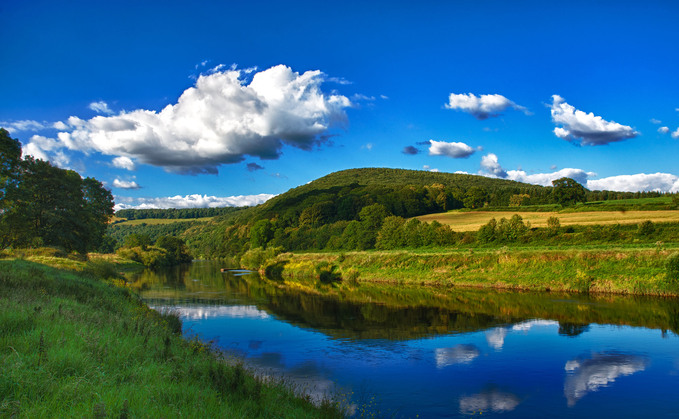
River Action says the Wye Catchment has been devastated by agricultural pollution
Campaign group River Action has been granted consent to pursue its legal challenge against the Environment Agency (EA) over its failure to protect the River Wye from pollution.
The action was granted after River Action successfully argued that by failing to prevent the spread of excessive levels of manure across agricultural land in the River Wye catchment, the EA has acted unlawfully by not enforcing the .
River Action claimed had these critical environmental regulations been fully enforced by the EA, then the substantial increase in levels of phosphorus in the soil across the catchment (a major cause of the river's algal blooms) could have been substantially mitigated.
According to the group, the persistence of these algal blooms has been a major cause of the 'severe ecological collapse' of the river, much of which is designated a Special Area of Conservation (SAC).
See also: Farmers frustrated at crop cover 'miscommunication'
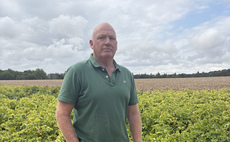
River Action's chairman and founder Charles Watson said: "We are delighted we have now finally been granted permission to go to court, where we will vigorously make the case that a prime cause for the recent ecological collapse of the River Wye is the EA's decision to slavishly follow Defra's guidance to not enforce critical provisions of the 2018 Farming Rules for Water.
"These critically important regulations state that fertilisers and manures must not be spread on soils already over-saturated with excess nutrients. Tragically, due to the uncontrolled growth of what we believe to be the largest concentration of intensive poultry production in Europe, this is exactly what has been allowed to happen, with the horrific environmental consequences for the River Wye being all too plain to see," he added.
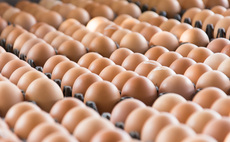
Poultry
A study by Lancaster University published in May 2022 found that the soils of the Wye are now significantly over-saturated with phosphorus (P), with 60 to 70 per cent of the 3,000 tonnes of which enter the river every year coming from agriculture. The most significant contributor to this is widely known to be the rapid recent growth of the region's intensive poultry industry.
An Environment Agency spokesperson said: "The River Wye is a beautiful and important part of our landscape, our resources and community wellbeing. We working with our partners to find solutions to tackle phosphate levels in the catchment by stepping up our farm visits to improve compliance and reduce pollution, enhancing monitoring at high-risk locations, and carrying out a detailed investigation into the management of poultry manure across the catchment.
"Moreover, the Environment Secretary recently held a roundtable with the Environment Agency, Natural England, local farmers, environment groups and others to discuss ongoing and future actions to restore the River Wye."