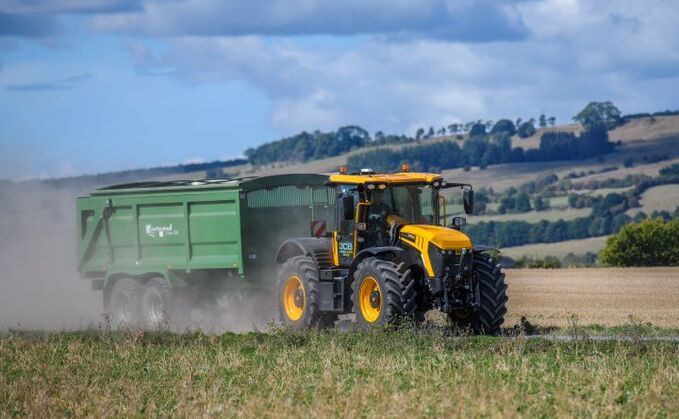
Anyone who has spent much time with any generation of Fastrac quickly appreciated the ride quality and road speed as standout points in the tractors design. However, earlier models suffer from transmission complexity and some reliability challenges.
With the launch of the 4000 Series in 2014, many of the original issues were swept away with a completely new design. Using an AGCO-sourced engine and transmission, the new range bought the product to the attention of conventional tractor buyers and has generally been well received.
There has, however been a perennial issue the in-cab controls and connectivity. When launched, the controls and basic, non-IsoBus colour screen were on a par with some of the competition, however in the near decade since its introduction, operators of the Fastrac have increasingly been frustrated, and often puzzled, with an operation interface which lacks the connectivity, adaptability and refinement of the other brands available.
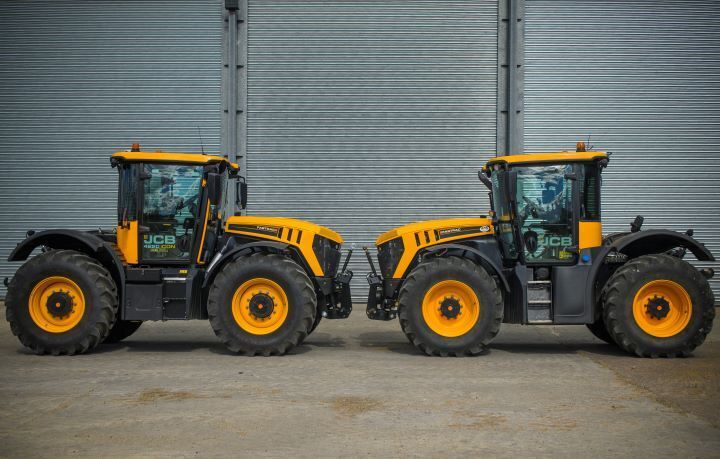
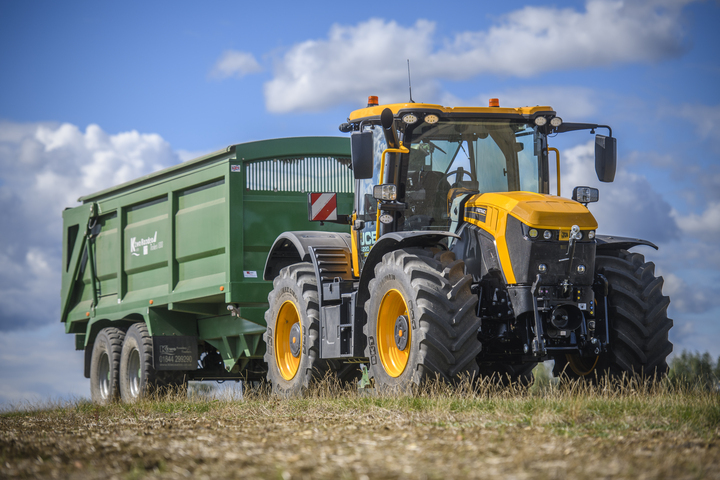
Our tested machine was the largest in the three-model 4000 Series range, with a maximum power of 235hp from the six-cylinder, 6.6-litre AGCO power engine, with a top road-speed of 63kph. For users looking for more output, the iCon upgrade has been introduced to the larger, less common two-model 8000 Series, where a maximum power of 348hp is offered.
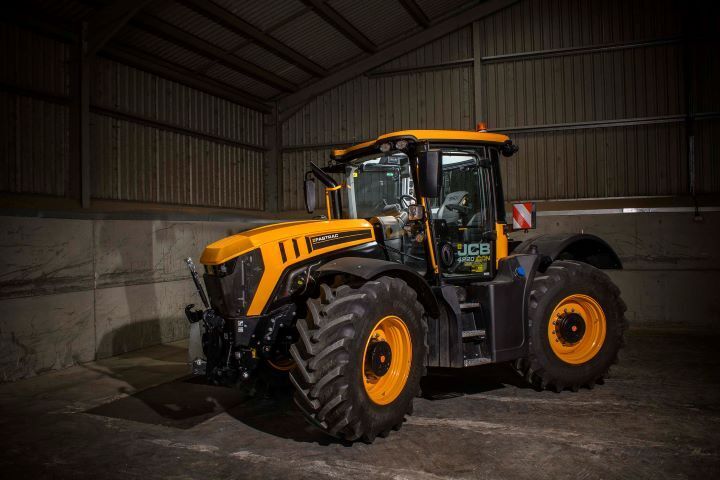
Externally, the iCon generation Fastrac 4220 shows few changes to the previous models.
Updated and refined lighting, including a host of LED options, now offer improved vision at night, particularly when using the high-level road lighting. Storage in the machine offside has been improved with a reconfigured compartment which now carries the alternative pto shaft and clevis drawbar in weather protected locations.
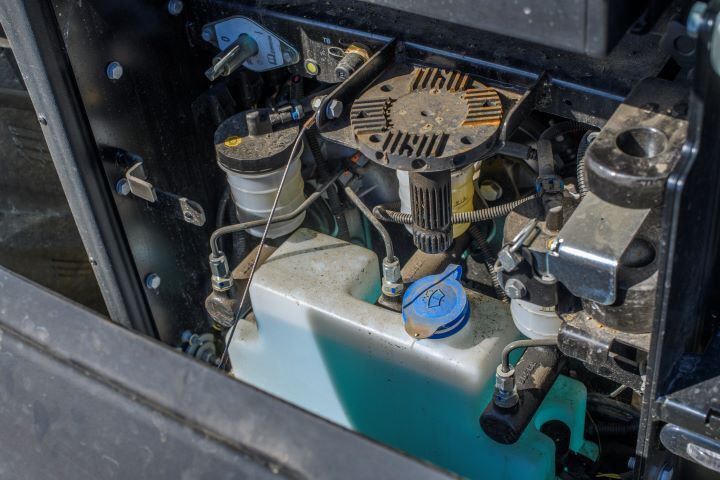
An integrated camera taking the position of the hitch mirror gives a much better field of vision of the drawbar, particularly at night. The new console offers the option of further camera connections to address the ongoing challenge of the rear linkage visibility from the centrally-mounted cab.
Cab and controls: Old to New
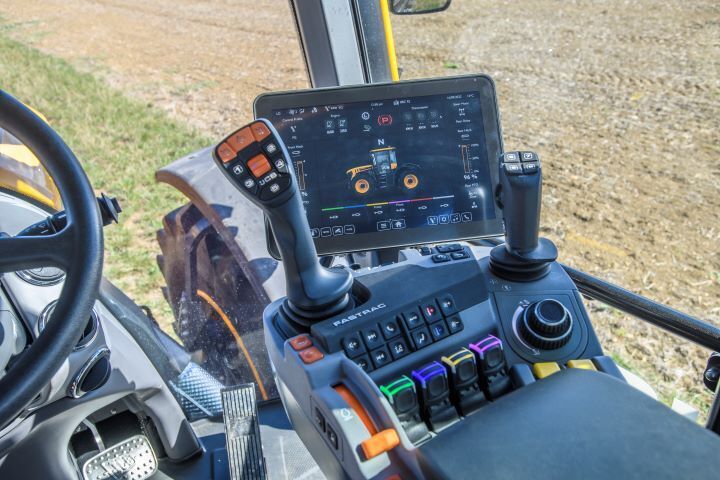
Moving between the old and new cab, the visual and operational differences are huge and certainly feel like a decade of progression between them. The B pillar mounted screen and analogue dash has been replaced with a complete digital arrangement mounted to the console and dash.
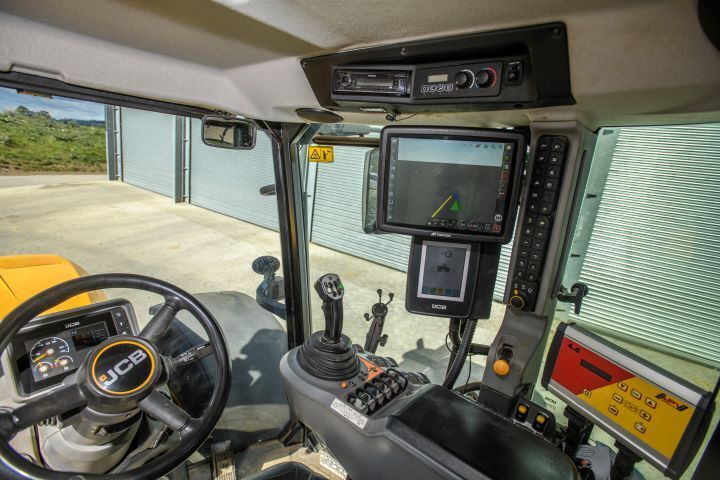
Aligning with its competitive stablemates, the main joystick is used to assign different functions based on the operator profile selected, in addition to the colour changing spool paddles. A secondary joystick for hydraulic control, again with fully assignable controls sits alongside, can be configured for use with a loader.
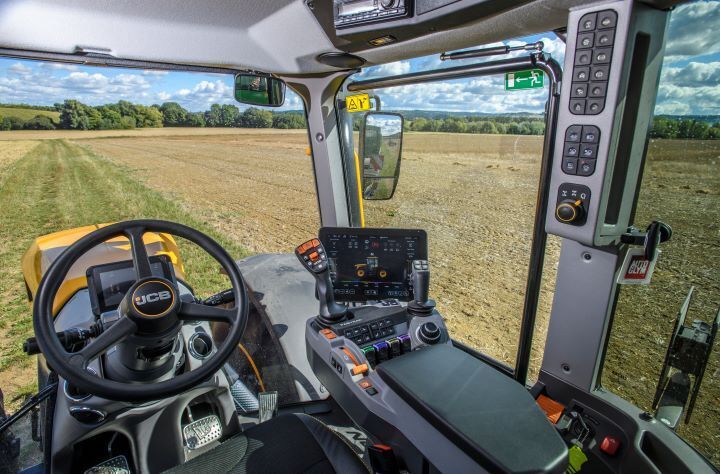
The odd placement of the pto switchgear has migrated to the console away from the corner of the B pillar and the mechanical air-actuation handbrake has been replaced with an electric paddle. In use, we preferred the older handbrake design, which was more apparent to its engaged or disengaged position and more ergonomic to use.
An obvious change from the original is the integration of an IsoBus and guidance system into the main console.
Our comparative machine uses an additional Topcon screen which, although effective, does clutter the cab. The new system, creatively titled JCB GPS, uses Novatel hardware and will allow twin steering on the 4000 Series. This operates the front and rear steering actuation separately, effectively counteracting any slip when working across slopes and crabbing the machine to realign the implement. Users looking to operate the unit with application equipment can specify section and rate control as options.
Owners requiring integration with an existing guidance platform can order the machine as GPS steer ready, however a bridge-link it required to join it all up.
In use, the new control system is well refined, with some software adjustments to the throttle and transmission making the uptake of drive underload much smoother and quieter.
Drive is controlled though either the joystick or the throttle, depending which is pressed or operated first. For more precise speed control, pushing the joystick sideways activates a scroll-wheel incrementally adjusting the forward speed. We found this easy to use when moving between unloading from the combine and travelling back on the road. Located across the top of the controller are the preset cruise control switches.
The HD screen can be rotated to the side of the seat to allow improved visibility, particularly if working with offset implements.
Disappointingly, the digital dashboard cannot be linked to the main console, which would allow data, such as the guidance information, to be shown here, alongside the main screen being used for IsoBus or rate control.
The build quality throughout aligns nicely with the automotive standards of the manufacturer, with well finished and fitted buttons and controls. Particularly of praise were the linkage control wheels, with a twin-stack for front and rear, which was logical and predictable to operate.
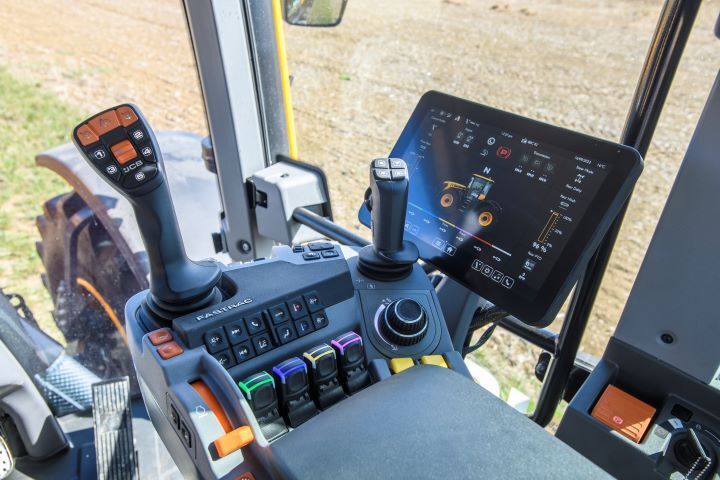
Despite the level of adjustment offered, we could not position the screen so it could be clearly viewed between the two joysticks. Adding to this, the main home screen included a large graphic of the tractor, and, detailed as this was, it did not provide any meaningful information, with the data displayed either side partially covered by the controls. Separate to this, the other screen pages were well placed, easy to read and navigate.
FG verdict
JCB has invested significantly into the creation of the iCon, with a claimed four years of research and development. The upgrades have removed many of the barriers which faced the range when standing against the competition. During our test we had few complaints on how the system worked and how users could navigate the menus even if some of the screen space was somewhat wasted.
We particularly liked the ability to press and go without the operator needing to chose between joystick or pedal drive and the wider flexibility of the system, allowing a less-than-regular user to predictably use the machine.
Our main criticism was the overall dimensions of the machine for its performance. With a wheelbase of nearly three metres, the 4220 is the most powerful in the 4000 range, which spans 178-235hp. Competitive machines are offered with a shorter wheelbase and more power, with some examples in excess of 300hp. Moving to the 8000 Series would address this, but it would increase the machines overall dimensions and lose the agility offered from the four-wheel steering.
In some circumstances the newly delivered abilities of the machine are not completely matched by its performance; adding another 50hp to our test 4220 would have been well received.