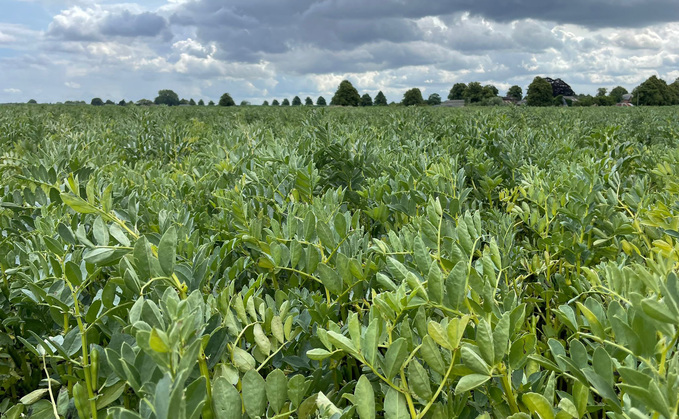
Peas and beans and generally most legumes are regarded by growers as crops accompanied by misconceptions of high risk, poor germination and inconsistent yields.听 But I think along the way we have gotten something wrong in our thinking.
If we want to square the circle with ever-increasing demand for improved soil health, lower input costs and bringing greater biological diversity into rotations, we not only need to look again at this Swiss army knife crop but also bring the supply chain with us on the journey. Which is why the NFU has released the Sustainable Protein Action Plan which makes a simple agronomic case before delivering into the checks and balances of homegrown protein production.
Read more:听Danish company looks at grass听protein听as a replacement for soya
The agronomic case is simple. Peas and beans fix atmospheric nitrogen, meaning growers can cut back on one of the biggest costs of each rotation. I can't see the future, but I can guess that input won't be free in the future.
Imported protein
The market and public awareness case is getting louder. The majority of imported protein crops being soybean meal, despite top of the league credentials as a source of easily digestible protein, is undercut by its association with deforestation.
Swapping even a fraction of that imported protein for home鈥慻rown peas and beans reduces carbon emissions, improves traceability and gives consumers a tangible British provenance story.听
Read more:听Strong yield performance from new听peas听and beans added to the PGRO Descriptive List
And finally demand. Demand for healthy food and sustainably produced animal feed is on the rise, the commercial opportunity for British pulses is real. We just need to work with the supply chain, government and retailers to ensure that the infrastructure is in place and that demand creates fair value for produce.
Planting what pays
That last point is crucial. Farmers will only plant what pays. Pulses deliver public goods, lower greenhouse gas emissions, improve soil structure and benefit pollinators, but current market systems rarely reward those services.听Policy听should stop treating environmental outcomes as separate from commercial crop production and start supporting food production that creates tangible benefits for the environment.
Which is why nearly a year ago we presented an ask to the then Defra Food Security Minister Daniel Zeichner in the form of government support for the production of homegrown sustainable protein. An ask similar to that seen in Europe has become a clear opportunity for change across the sector. It's a simple solution; pay growers for the environmental and carbon reduction benefits created by legume crops per hectare across England and Wales. A simple ask, but red tape and current听policies听remain.听
Read more:听NFU campaign aims to showcase UK听arable听farmers
Supply chain
Within that ask, we also detail the extent to which support and adoption of pulses across the supply chain would be key to driving significant change. Simply growing more domestically would do little to create real term change around their value in the marketplace, but sustained support, adoption and dedicated demand for these crops within feed rations and the wider food supply chain, could create real, long-term opportunities for not only the crops sector but the wider food supply chain as well.
The NFU's Sustainable Protein Action Plan sits alongside the NFU Crops Board Strategy: Harvesting Growth as a blueprint for a stronger, more sustainable, more profitable British farming future. Now is the moment to move off the sidelines and deliver real change. Together we can turn this plan into action and, in turn, cultivate healthier soils, cut emissions and improve farm sustainability.